
Key takeaways
- Switches fail when they are rushed — a one-week audit prevents a one-month headache.
- Always test with samples against your real waste, your real loads and your real staff.
- Right sizes, a clear switch date and a customer announcement turn a purchase into a brand story.
Most businesses we speak to already know why they should move to compostable packaging — compliance pressure, customer expectations, and the simple desire to stop feeding landfills. What they want to know is how, without disrupting operations or discovering mid-month that the new bags do not fit the bins. The businesses that switch smoothly all do the same six things. Here is the checklist.
Step 1: Audit what you actually use today
Before you look at a single product, document your current consumption. For each site, note the bag sizes in use, approximate volumes per week or month, colours (many operations colour-code waste streams), and any printing on current stock. Walk through the operation at peak time — the bags used at 11am on a Saturday tell you more than the ones used on a quiet Tuesday.
- Sizes and quantities per site, not just per company
- Which waste streams are wet, heavy or sharp-edged
- Current storage space — liners come in compact rolls, but volume still matters
- Who approves the purchase, and when the current contract or stock runs out
Step 2: Match products to real loads
Compostable does not mean delicate. A certified compostable liner is engineered for load and leak resistance — but you should verify it against your reality, not a brochure’s. Request samples and run them through your worst days: the kitchen’s wettest waste, the garden’s heaviest cuttings, the event’s longest queue. A week of honest testing tells you more than a month of quotes.
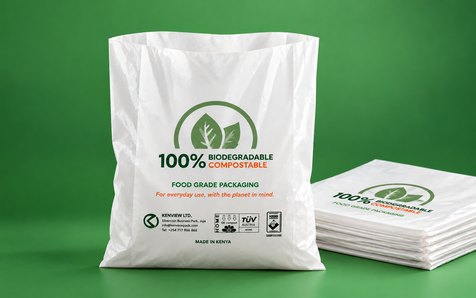
Step 3: Get the sizes right the first time
Oversized bags mean paying for air and fitting complaints; undersized bags mean torn liners and double-bagging costs. Kenview’s stock range runs from 10L to 110L in six colours, which covers most retail, hospitality and institutional needs — and colour-coding keeps waste streams honest at the point of use. If your operation sits outside standard sizes, custom production is exactly the kind of conversation our team handles every week.

Step 4: Plan the switch date and brief your team
Pick a switch date that lines up with natural stock run-out, then brief the people who will actually handle the bags: storekeepers, kitchen leads, cleaners, till staff. Two minutes of explanation — storage away from prolonged sunlight, no overstuffing beyond tested loads — prevents most first-week complaints. For multi-site operations, phase the rollout site by site so lessons from the first site reach the second.
Step 5: Put your brand on it
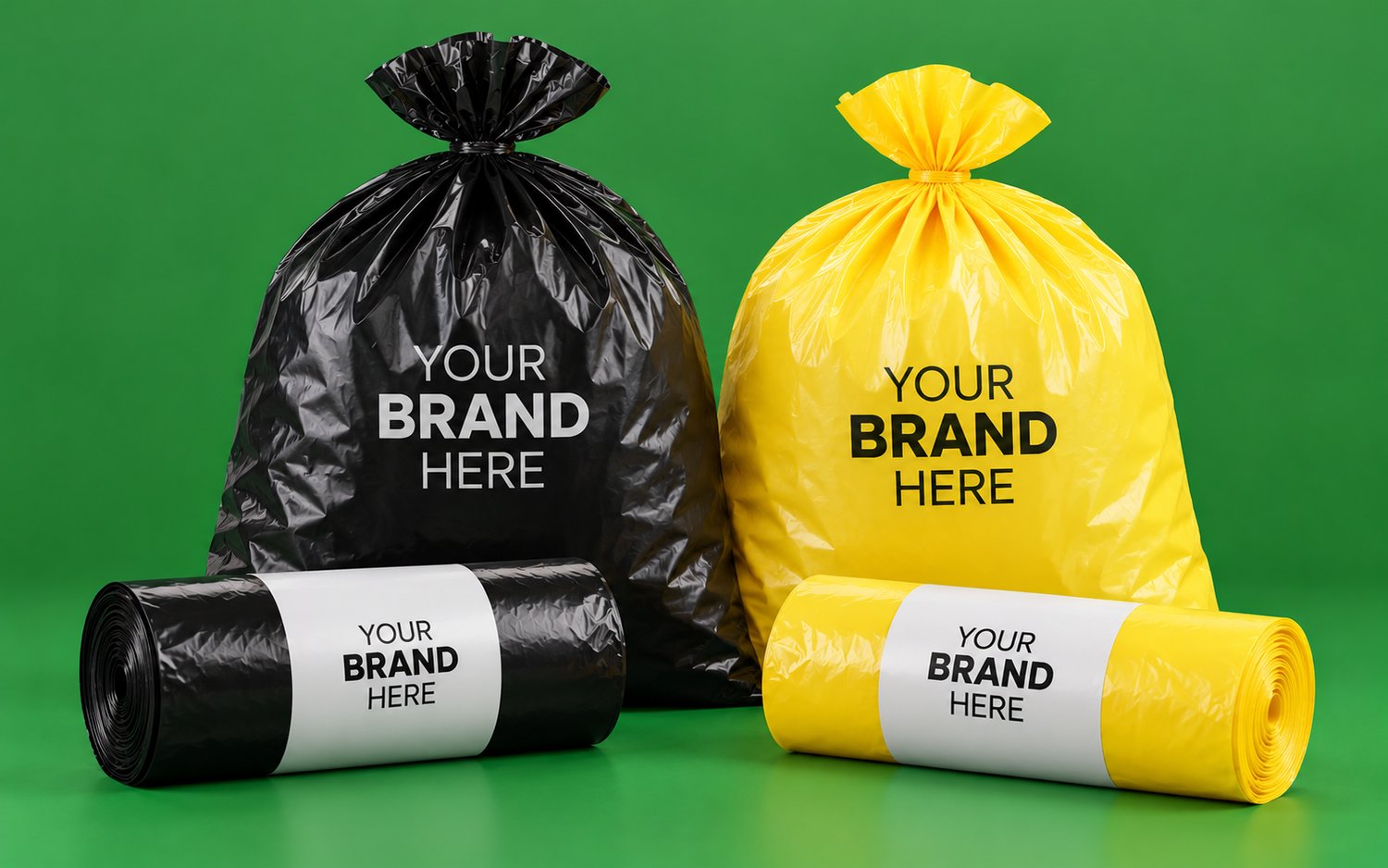
Custom printing turns a functional purchase into a brand asset. A bin liner that carries your logo works in rooms no advert reaches — back-of-house, service corridors, and everywhere your operational teams touch the customer experience. Print runs carry minimum order quantities, so the right moment to raise printing is at your first serious volume enquiry, not after the third reorder.
Step 6: Tell your customers
A packaging switch is one of the rare operational changes that customers actively want to hear about. One line of signage at the till, one post on social channels, one paragraph in the next ESG or company update — referencing the certifications behind the change — converts a procurement decision into goodwill. Keep the claim specific and verified: “certified compostable, TÜV Austria OK compost HOME” says more than any adjective.
What it costs — honestly
Certified compostable packaging typically costs more per unit than conventional plastic, and pretending otherwise helps nobody. What offsets the difference is rarely a single factor: it is the compliance risk you remove, the tender and ESG documentation you gain, the brand value of a visible environmental commitment, and volume pricing that improves as your usage settles. Send your volumes and we will quote precisely — with a production schedule attached, so finance sees the full picture, not just the unit price.
Mistakes we see — and how to avoid them
- Buying on price alone: the cheapest “biodegradable” bag usually has no certification behind it. Verify first, then compare prices on equal claims.
- Skipping the sample step: a bag that works for dry office waste may not survive wet kitchen waste. Always test your real loads.
- Guessing sizes: measure your bins and your typical loads; right-sizing pays for itself within the first order cycle.
- No staff briefing: the best bag in the world fails if the team stuffing it was never told what changed.
- Treating it as a one-off purchase: a supply partnership — consistent quality, dependable lead times, documents on request — is worth more than a one-time bargain.
Ready to run the checklist with real numbers?
Tell us what you use today — sizes, volumes, timelines — and our team will come back within one business day with a tailored quote, samples for testing, and a production schedule from our Juja facility. Or simply call us and talk it through with a person.