
Stand in the cleaning aisle of any Nairobi supermarket and you will see the words everywhere: eco-friendly, green, biodegradable, compostable. For a shopper, the difference is a nice detail. For a business buying packaging by the thousands, the difference is money, compliance and reputation. Choosing a bag because of the wrong word on it can mean stock that tears, marketing claims you cannot defend, and tender documents that fail on technicalities.
This guide explains the three terms in plain English, shows you how to verify each claim, and finishes with the five questions we recommend asking any packaging supplier before you sign an order.
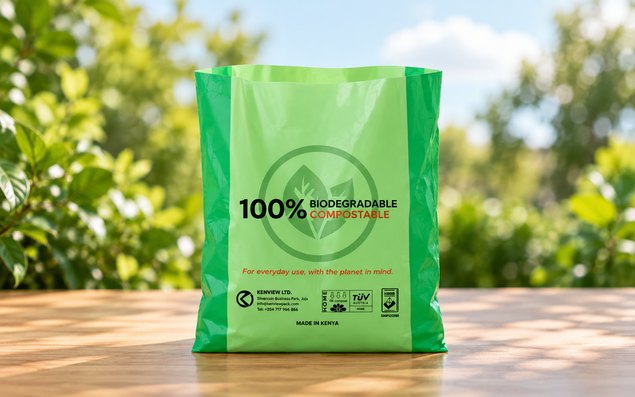
Biodegradable: the vaguest word in packaging
Biodegradable simply means microorganisms can eventually break a material down. The catch is the word eventually. There is no internationally agreed timeframe attached to the term itself, and no guarantee about what is left behind at the end. Technically, a conventional plastic bag is biodegradable too — over a few hundred years, fragmenting into microplastics along the way.
That is why a label that only says “biodegradable” should raise questions rather than close them. Responsible manufacturers can answer them easily: under what conditions does it break down, how long does it take, and what residue remains? If a supplier cannot or will not answer all three, treat the claim as decoration.
Compostable: a claim you can actually verify
Compostable is a much stronger, more precise promise. A compostable material must break down into water, carbon dioxide and biomass within a defined timeframe, under defined conditions, without leaving toxic residue behind. Because the claim is specific, it can be tested — and certified — by independent laboratories.
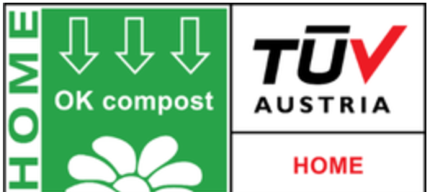
The certification that matters most for everyday use is TÜV Austria OK compost HOME. It verifies that a product breaks down in a home composting environment — no special industrial facility required, which is exactly the situation most Kenyan households and businesses are in. Kenview’s bag range carries this certification, alongside KEBS quality approval and NEMA environmental compliance, so the claim on the box is a claim your procurement team can document.
Recyclable: only as good as the system behind it
Recyclable describes a material that can be reprocessed — but whether it actually is depends on collection, sorting and processing infrastructure that varies enormously across Kenya. A bag marked recyclable in Industrial Area may have no practical recycling route in another county. Recyclable does not mean recycled, and it does not mean the material disappears at end of life.
For waste bags and liners specifically, recyclability is largely theoretical: the bag is contaminated with the waste it carried, which rules out most recycling streams. That is precisely the job compostable liners were designed for — the bag and its contents can leave the waste stream together, safely.
Why these words matter for your business
- Compliance: county enforcement and Kenya’s waste-management rules are tightening, and packaging claims are part of the conversation. Vague claims invite questions you do not want.
- Marketing integrity: if you tell customers your packaging is compostable, that claim must survive scrutiny on social media and in the press. Verified certification is your insurance policy against greenwashing accusations.
- Tenders and ESG reporting: procurement teams increasingly ask for documentary proof, not adjectives. Certificates slot straight into ESG and tender files; slogans do not.
- Customer trust: buyers notice when a “green” bag splits on the first use. Verified performance protects the brand promise you just paid to make.
Five questions to ask any packaging supplier
- Which certification backs the claim — and can you see the certificate, not just the logo?
- Under what conditions and within what timeframe does the product break down?
- What load and leak performance has been tested, and for which sizes?
- Where is it manufactured, and under whose quality oversight?
- Is compliance documentation available for your audit or tender file?
Where Kenview stands on all three
Kenview manufactures 100% biodegradable and compostable bags at its own facility in Juja, Kenya — in stock sizes from 10L to 110L and six colours, with custom printing available. Every product is backed by three independent marks: KEBS for quality, NEMA for environmental compliance, and TÜV Austria OK compost HOME for verified home compostability. Certificates and test reports are available on request, because a claim you cannot verify is not a claim worth making.
Still weighing your options? Send us your current bag specification and we will tell you honestly how a certified compostable alternative compares — sizes, loads and timelines included.