
Key takeaways
- Kenya’s 2017 carrier-bag ban is among the strictest in the world, with fines reported at up to KSh 4 million.
- The rules have kept evolving — from the PET bottle restrictions of 2020 to producer-responsibility obligations under the Sustainable Waste Management Act.
- Waste liners used for waste management sit outside the carrier-bag ban, but certified compostable liners take your business further.
When Kenya banned plastic carrier bags in August 2017, the story made headlines around the world. Shoppers, hawkers and supermarket chains had barely finished adjusting when the next wave of rules arrived: restrictions on PET bottles, then a national waste-management law that put new responsibilities on producers. Nearly a decade on, packaging is no longer a background purchasing decision — it is a compliance topic that reaches into retail, hospitality, institutions and manufacturing alike.
Here is a practical read on where the rules stand, what they mean for different kinds of businesses, and how to keep your packaging — and your paperwork — ahead of the conversation.
A short timeline of Kenya’s plastics rules
- August 2017 — the carrier-bag ban. Kenya prohibited the making, selling and use of plastic carrier bags, with penalties reported at up to KSh 4 million and, in serious cases, imprisonment. It remains one of the toughest bans anywhere.
- 2020 — PET bottle restrictions. Single-use PET bottles were banned in protected natural areas, signalling that the policy spotlight would keep moving across packaging formats.
- 2022 — the Sustainable Waste Management Act. A national framework introducing separation at source and extended producer responsibility (EPR) — the principle that businesses that place packaging on the market share responsibility for what happens to it at end of life.
- Ongoing — county-level enforcement. Counties translate national law into day-to-day practice, from market inspections to waste-segregation requirements for commercial premises.
What the rules mean for your business
- Retail: handing a customer a plastic carrier bag at the till is off the table. The question is what replaces it — and whether that replacement survives contact with real shopping.
- Hospitality: kitchens, events and deliveries generate heavy wet waste. Your liners must contain it without leaking, while your customer-facing packaging carries your brand’s environmental promise.
- Manufacturing and institutions: EPR obligations and tender requirements increasingly demand documentation — where packaging comes from, what it is made of, and what happens to it afterwards.
- Everyone: customers are watching. A photo of the wrong bag leaving your premises travels further than any compliance notice.
The gap the ban created
The ban removed the cheapest option overnight — and demand for alternatives exploded. Quality, however, did not move at the same speed. Businesses have cycled through paper bags that fail in the rain, reusable bags that fray after a fortnight, and “green” bags whose environmental claims dissolve the moment you ask for proof. Each failed substitution costs money twice: once in stock that cannot be used, and again in customer goodwill.
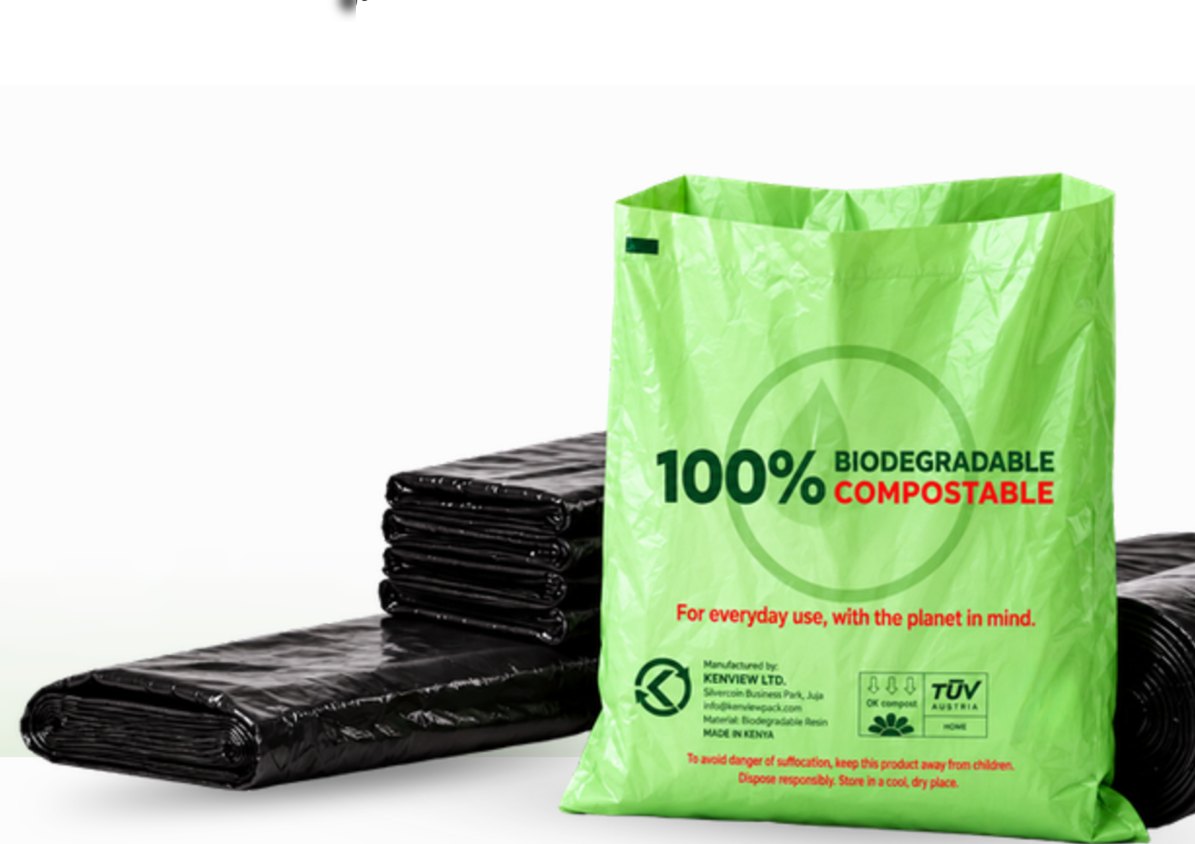
Where compostable packaging fits in
An important nuance: bags and liners used for waste management generally fall outside the scope of the carrier-bag ban — confirm the current gazette guidance for your use case. But many businesses are choosing certified compostable liners anyway, for reasons that go beyond legality. A liner that is verified to break down in home composting conditions turns the entire bag-and-waste stream into a story you can document: fewer plastics to landfill, a cleaner EPR narrative, and packaging that matches what your customers increasingly expect.
For customer-facing bags, certified compostable carrier bags sidestep the ban entirely while giving your brand a visible, defensible environmental claim — printed with your logo, if you want it.
A five-minute compliance checklist for procurement
- Confirm your packaging class is legal for its intended use — and keep a note of the guidance you relied on.
- Ask suppliers for certificate copies (KEBS, NEMA, and any compostability mark), not just logos on an invoice.
- Prefer a manufacturer you can visit or call — local accountability beats an imported box with no return address.
- File the documentation where your ESG, EPR and tender teams can find it.
- Plan the end-of-life message: what should your customers and staff do with the bag after use?
How Kenview keeps you on the right side
Kenview manufactures 100% biodegradable and compostable bags in Juja, Kenya, in stock sizes from 10L to 110L and six colours. Every batch leaves a facility that holds KEBS quality certification, NEMA environmental approval and TÜV Austria OK compost HOME verification for home compostability — and compliance documents are available on request, the same day you ask. When the rules shift again, you will have a local partner who answers the phone, not a shipping notification.
This article is general business information, not legal advice. For your specific use case, confirm current requirements with NEMA, KEBS and your county government.